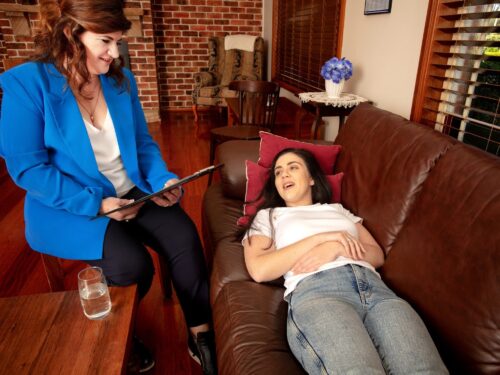

Anxiety is a common mental health concern that affects millions of people worldwide. It can appear in various forms, such as generalised anxiety disorder, panic disorder, social anxiety, and specific phobias. While traditional treatments like medication and cognitive-behavioural therapy have proven effective, hypnotherapy has emerged as a valuable complementary approach to managing anxiety symptoms.
Hypnotherapy for anxiety is a clinical technique that uses guided focused attention and verbal suggestion to lower physiological arousal and change the patterns that trigger anxious thoughts. It is not stage hypnosis. The client retains awareness throughout the session and can end it at any point. This article covers the mechanism, the evidence base, the anxiety types it suits, what happens in a session, how many sessions are typically needed, and how it compares with cognitive behavioural therapy (CBT) and medication.
How Hypnotherapy Treats Anxiety
Hypnotherapy treats anxiety by inducing a focused, relaxed state in which the conscious mind's critical filter is reduced and the subconscious processes therapeutic suggestions more directly. EEG studies of the hypnotic state show increased theta activity and reduced activity in the default mode network, which is the brain network associated with self-referential worry.
In a session, the hypnotherapist guides the client through progressive muscle relaxation and focused imagery. Once the client reaches focused absorption, the therapist introduces suggestions targeted at the client's specific anxiety pattern: reframing of triggers, anchoring of calm responses to physical cues, or rehearsal of feared situations under controlled conditions.
The technique differs from CBT in that change is sought primarily through subconscious processing rather than conscious analysis. It overlaps with mindfulness-based approaches in its use of focused attention but adds explicit therapeutic suggestions as the active mechanism.
Does Hypnotherapy work for Anxiety?
Hypnotherapy has shown promising results in treating various types of anxiety disorders. For example, a study published in the American Journal of Clinical Hypnosis found that hypnotherapy was effective in reducing symptoms of generalised anxiety disorder (GAD). Participants who received hypnotherapy reported significant improvements in anxiety levels, sleep quality, and overall well-being compared to those who did not receive hypnotherapy.
Yes, published research shows hypnotherapy reduces anxiety symptoms in most clients who complete a course of treatment. A 2019 meta an analysis in the *American Journal of Clinical Hypnosis by Valentine, Milling, Clark and Moriarty reviewed 15 controlled trials and reported that participants receiving hypnosis showed greater symptom reduction than 79% of control participants at the end of treatment.
Hypnotherapy works less well for people with active psychosis, dissociative identity disorder, or severe personality disorders without specialist supervision. It is not a substitute for psychiatric care in these cases.
Effectiveness varies by anxiety type. Specific phobias and acute situational anxiety tend to respond fastest. Generalised anxiety disorder (GAD) and panic disorder require longer treatment courses. Hypnotic susceptibility measured on standardised scales such as the Stanford Hypnotic Susceptibility Scale, predicts response. Clients who score higher on susceptibility tend to show larger gains.
Types of Anxiety Hypnotherapy can treat
Another valuable aspect of anxiety treatment with hypnosis is its ability to teach individuals effective coping mechanisms. The hypnotherapist can suggest positive language, visualisation techniques, and other strategies that clients can use in their daily lives to manage anxiety when it arises. These same techniques are also highly effective for weight loss and managing emotional eating triggered by stress. These tools can be particularly beneficial for those who experience anxiety in specific situations, such as public speaking, social interactions, or travel.
Hypnotherapy is used clinically for the major DSM-5 anxiety disorder categories: generalised anxiety disorder, panic disorder, social anxiety, specific phobias, and anxiety with co-morbid depression. The approach is adjusted for each.
Generalised Anxiety Disorder
Generalised anxiety disorder responds to ego-strengthening suggestions, cognitive reframing of worry patterns, and post-hypnotic suggestions for self-induced relaxation between sessions. Evidence indicates hypnotherapy reduces GAD symptoms at rates comparable to CBT
Panic disorder and panic attacks
Panic disorder is treated with anchoring techniques that link a physical cue to a calm state, interoceptive desensitisation under hypnosis, and rehearsal of breathing patterns that interrupt the panic cycle. Sessions often include teaching self-hypnosis the client uses at the first sign of a panic onset.
Social anxiety
Social anxiety responds to ego-strengthening combined with rehearsal of feared social situations in trance, where the client experiences the situation with reduced physiological reactivity. The associative learning carries into real situations.
Specific phobias
Specific phobias are treated with systematic desensitisation under hypnosis. Single-incident phobias such as flying, heights, or dental fear often resolve in 1–3 sessions. Phobias with longer onset histories take more time.
Anxiety with Depression
When anxiety co-occurs with depression, hypnotherapy is used as an adjunct rather than a primary treatment. The depression component typically requires additional psychological or medical management. Hypnotherapy targets the anxiety symptoms within an integrated plan.
What happens in a Hypnotherapy Session for Anxiety
Hypnotherapy can also help individuals identify and address the root causes of their anxiety. Often, anxiety is rooted in past experiences, negative thought patterns, or limiting beliefs. During hypnotherapy sessions, the therapist can work with the client to uncover these underlying issues and reframe them in a more positive and empowering way. By addressing the source of the anxiety, individuals can develop a greater sense of control and confidence in managing their symptoms.
The first session is usually longer and includes a full anxiety history, identification of triggers, and discussion of treatment goals. The hypnotherapist also assesses suitability and explains what hypnosis is and is not.
Induction begins with progressive relaxation. The therapist guides attention from external stimuli inward through muscle relaxation and breath focus. Most clients describe the resulting state as similar to the moment before sleep, with sustained awareness of the therapist's voice.
In the therapy phase, the hypnotherapist works with the client to uncover the root causes of the anxiety, past experiences, negative thought patterns, or limiting beliefs, and reframe them. Suggestions are matched to the client's anxiety pattern: reframing of trigger meaning, rehearsal of calmer responses, or visualisation of successful outcomes in feared situations. Re-orientation returns the client to ordinary alertness, usually with a brief discussion of the session.
Finding a Qualified Hypnotherapist for Anxiety
For individuals seeking anxiety treatment hypnosis in Penrith, Mulgoa, Glenmore Park, Silverdale, Jordan Springs, or Harrington Park, it's essential to find a qualified and experienced hypnotherapist. Look for a practitioner who has specific training in using hypnotherapy for anxiety and who is registered with a recognised professional organisation. A skilled hypnotherapist will take the time to understand your unique needs and develop a personalised treatment plan to help you overcome your anxiety. Anxiety responds well to hypnotherapy when the treatment is matched to the individual not applied as a standard script. At Hilltop Hypnotherapy, sessions are designed around your specific patterns, triggers, and goals, whether you're dealing with generalised anxiety, social anxiety, or stress that's become unmanageable day-to-day. If you're in Penrith, Glenmore Park, Jordan Springs, Silverdale, Mulgoa, or Harrington Park and want to understand what treatment actually involves.
In conclusion, hypnotherapy offers a valuable and effective approach to anxiety treatment. By promoting deep relaxation, addressing the root causes of anxiety, and teaching coping mechanisms, hypnotherapy can help individuals in Penrith, Mulgoa, Glenmore Park, Silverdale, Jordan Springs, Harrington Park, and beyond find relief from their anxiety symptoms. If you’re struggling with anxiety, consider exploring hypnotherapy as a complementary treatment option. With the support of a qualified hypnotherapist, you can unlock the power of your mind and take control of your anxiety, leading to a more peaceful and fulfilling life.
Frequently Asked Questions
Does Hypnotherapy work for Anxiety?
Yes. Controlled trials and meta-analyses show hypnotherapy reduces anxiety symptoms in most clients who complete a course of treatment. Effectiveness is highest for specific phobias and acute situational anxiety, and good though slower for generalised anxiety disorder and panic disorder. Response correlates with hypnotic susceptibility and with regular practice of self-hypnosis between sessions.
How does hypnotherapy work for anxiety?
Hypnotherapy works by inducing a state of focused attention and reduced critical thinking, in which the subconscious mind processes therapeutic suggestions more directly. EEG studies show increased theta activity and reduced activity in brain regions associated with self-referential worry. In this state, the hypnotherapist delivers suggestions that reframe anxiety triggers and anchor calmer physiological responses.
How many hypnotherapy sessions are needed for anxiety?
Most people need 4–8 sessions for anxiety. Specific phobias often resolve in 1–3 sessions, while generalised anxiety disorder and panic disorder typically need the higher end of the range. Maintenance sessions every 4–6 weeks are common once symptoms ease. The full course length depends on the type of anxiety, its duration, and how regularly the client practises self-hypnosis.
What does a Hypnotherapy Session for Anxiety feel like?
Most clients describe it as deep relaxation with sustained awareness, similar to the state just before sleep. The client hears the therapist throughout, can speak when asked, and remembers the session afterwards. There is no loss of control or unconsciousness. Many clients feel calmer immediately after a session.
Is hypnotherapy safe?
Hypnotherapy is considered safe for most people when delivered by a qualified practitioner. It is not recommended for those with active psychosis, severe dissociative disorders, or current substance dependence without specialist supervision. Clients with significant trauma histories should work with practitioners trained in trauma-informed practice.
Can hypnotherapy replace medication for anxiety?
Hypnotherapy can reduce or eliminate the need for medication in some cases, but the decision to change medication must be made with the prescribing doctor. Stopping anxiolytic medication without medical guidance, particularly benzodiazepines carries withdrawal risks. Many clients use hypnotherapy alongside medication, then taper medication under medical supervision as anxiety reduces.

Margaret Muscat is a Strategic Clinical Hypnotherapist and founder of Hilltop Hypnotherapy, trained through the prestigious Institute of Applied Psychology and accredited as an ISPA Practitioner, as well as an active member of both the Australian Hypnotherapist Association and the Hypnotherapy Council of Australia. She specialises in anxiety, depression, trauma, phobias, and dependency, combining evidence-based Clinical Hypnotherapy with Strategic Psychotherapy to deliver transformative, lasting results. Through her articles, Margaret shares practical, research-informed strategies drawn from years of clinical experience and deep personal insight.
Book Appointment NowRelated Posts
Hypnosis vs Meditation: Which Mind Practice Is Right for You?
Hypnosis and meditation both produce states of focused relaxation, and both have documented effects on stress, anxiety, and mental wellbeing. Yet they work through different mechanisms, serve different...
Hypnotherapy for Confidence: Building Self-Esteem from Within
Low confidence is not a fixed character trait. In most people, it is a learned pattern stored in the subconscious mind that shapes automatic responses to situations like social interaction, workplace...