Table of Contents
- What Is Online Hypnotherapy?
- Is Online Hypnotherapy as Effective as In-Person Sessions?
- What Can Online Hypnotherapy Help With?
- What Affects the Outcomes of Online Hypnotherapy?
- How to Prepare for an Online Hypnotherapy Session
- Choosing a Qualified Online Hypnotherapist in Australia
- Online Hypnotherapy at Hilltop Hypnotherapy
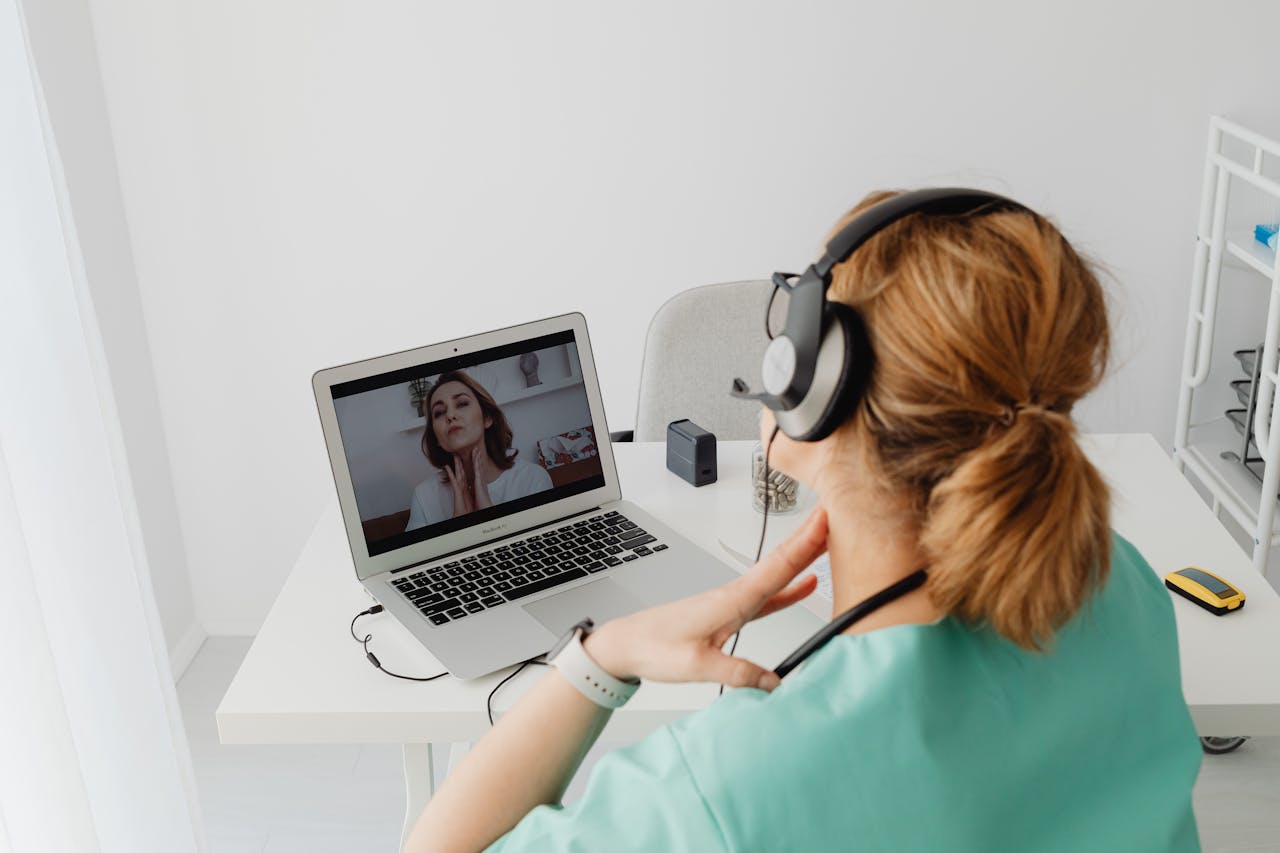
Online hypnotherapy has become a standard service offering for practitioners across Australia, with clients attending sessions from home via video call rather than travelling to a clinic. For many people considering hypnotherapy for the first time, the immediate question is whether this format is genuinely as effective as sitting in a room with a therapist, or whether something is lost in translation. This article covers what online hypnotherapy involves, what the research says about its effectiveness, the conditions it can address, what influences outcomes, how to prepare for a session, and what to look for in a qualified practitioner.
What Is Online Hypnotherapy?
Online hypnotherapy delivers the same therapeutic process as an in-person session, with the difference that the practitioner and client connect through a secure video platform rather than meeting face to face. Common platforms used in Australia include Zoom and Google Meet, though practitioners may use other encrypted services depending on their preference and privacy requirements.
The structure of a session follows the same sequence regardless of delivery format: an initial discussion to establish goals and address any questions, a relaxation and induction phase, the therapeutic suggestion work itself, and a closing check-in. Because the induction process relies primarily on verbal instruction, guided imagery and breathing techniques rather than any physical component, it transfers to video delivery without modification.
The therapeutic approaches used in clinic, including solution-focused hypnotherapy, cognitive hypnotherapy and Ericksonian methods, can all be applied equally online. For readers who want a broader understanding of the process before considering sessions, the articles on what hypnotherapy is and the types of hypnotherapy available provide useful background.
Is Online Hypnotherapy as Effective as In-Person Sessions?
The available research supports equivalent outcomes between online and in-person delivery. A 2023 review published in the International Journal of Clinical and Experimental Hypnosis (Hasan & Vasant, 2023, Vol. 71, No. 2) examined the adoption of remote hypnotherapy via video platforms and concluded that it has the potential to become a standard worldwide mode of delivery, based on documented outcomes and accessibility. The authors reviewed both clinical applications and practitioner training conducted remotely, finding no meaningful reduction in effectiveness attributable to the change in format.
A systematic review published in the Journal of Medical Internet Research (Vol. 14, No. 4) assessed online therapy across multiple modalities and found results indicating that online therapy is at least equivalent to face-to-face therapy. This finding has been replicated across a number of therapy types, supporting the broader telehealth model that has expanded significantly in Australia since 2020.
The Institute of Clinical Hypnotherapy and Psychotherapy (ICHP), the professional body with membership across Australasia, notes in its published materials that hypnosis used in conjunction with evidence-based psychotherapies such as cognitive behavioural therapy produces outcomes two to three times higher than therapy alone. This is not specific to delivery mode, and applies to sessions conducted online.
One of the more extensively studied applications is gut-directed hypnotherapy (GDH) for irritable bowel syndrome. Multiple trials and reviews published in gastroenterology literature have documented symptomatic relief and psychological benefit from GDH, and the Hasan & Vasant (2023) review specifically noted that this application has been delivered remotely with maintained outcomes. While IBS is a specialised area, it illustrates that even presentations with a physiological component respond to online delivery.
It is worth noting that the research base for online hypnotherapy specifically is still developing, and some clinical populations have been studied more extensively than others. However, no current body of evidence suggests that in-person delivery produces meaningfully superior outcomes for the presentations most commonly brought to hypnotherapy. For a broader overview of the evidence base, see the article on whether hypnotherapy works.
What Can Online Hypnotherapy Help With?
The same range of presentations addressed in-clinic can be worked on through online sessions. The following are areas where hypnotherapy has documented applications and where online delivery is suitable:
Anxiety
Hypnotherapy is used to address anxiety by supporting relaxation, reducing the automaticity of anxious thought patterns, and building more adaptive responses to stress triggers. Online delivery is often well-suited to anxiety clients because attending a session from a familiar, private environment typically involves lower baseline arousal than travelling to an unfamiliar location. For more on how hypnotherapy addresses anxiety specifically, see hypnotherapy for anxiety treatment.
Sleep Difficulties and Insomnia
Hypnotherapy supports sleep by working with the mental and behavioural patterns that maintain insomnia, including pre-sleep rumination, conditioned arousal and inconsistent sleep associations. Conducting sessions from home, in or near the sleep environment, can be practically advantageous for this presentation. The article on sleep hypnotherapy and insomnia provides more detail on how the approach works.
Weight Management
Hypnotherapy for weight management works with the habitual and emotional patterns associated with eating behaviour rather than addressing physiology directly. The suggestion-based work used in these sessions does not require any physical component and transfers to video delivery without adjustment. Further information is available in the article on hypnotherapy for weight loss.
Trauma
Working with trauma-related presentations online requires a practitioner with specific training in trauma-informed approaches. Where that training is present, being in a safe and controlled home environment can offer a degree of containment that some clients find supportive during this work. For an overview of how hypnotherapy is applied to trauma recovery, see hypnotherapy for trauma recovery.
Dependencies
Hypnotherapy is used as part of a broader approach to dependency, working with the habitual, emotional and motivational components of addictive behaviour. Standard behavioural change protocols apply in online sessions in the same way as in clinic. See hypnotherapy for dependencies and hypnotherapy for alcohol use for more detail.
This list is not exhaustive. A qualified practitioner can advise on whether online hypnotherapy is appropriate for a specific concern during an initial consultation.
What Affects the Outcomes of Online Hypnotherapy?
Several factors influence how effective any course of hypnotherapy will be, regardless of whether sessions are conducted online or in person.
Practitioner Training and Qualifications
The practitioner's clinical training and experience is the most significant variable in outcomes. A practitioner with a recognised qualification, relevant professional membership and specific experience in the presenting concern will produce better results than an undertrained or uncertified one, irrespective of the delivery format. This is covered in detail in the article on hypnotherapist qualifications.
Client Motivation and Readiness
Hypnosis is not a passive process. The client enters and sustains the hypnotic state actively, with the practitioner's guidance. Clients who are genuinely motivated to work on a presenting concern, follow the practitioner's instructions and apply any between-session work consistently tend to achieve better outcomes than those who approach sessions with passivity or significant scepticism. Willingness to engage is more relevant than the degree of prior experience with hypnotherapy.
Environment During the Session
The quality of the environment a client creates at home has a direct bearing on session effectiveness. A quiet, private space with no risk of interruption is the baseline requirement. Informing other household members before the session begins, silencing all devices other than the one in use, and ensuring a stable internet connection all reduce the likelihood of disruptions. Some clients find that relaxing in a familiar home environment is easier than settling into a clinical space, and where this is the case it can support a deeper and more responsive hypnotic state.
Consistency Across a Course of Sessions
Outcomes in hypnotherapy are associated with attending a course of sessions rather than expecting change from a single appointment. Most presentations require several sessions to produce durable results, and consistent attendance is associated with better outcomes than irregular or incomplete courses of treatment. Online delivery removes the travel, scheduling and cost barriers that can interrupt attendance for in-person clients, and this practical advantage supports the regularity that produces results.
How to Prepare for an Online Hypnotherapy Session
Preparing well for an online session allows the time to be used more effectively and reduces the chance of technical or environmental disruption.
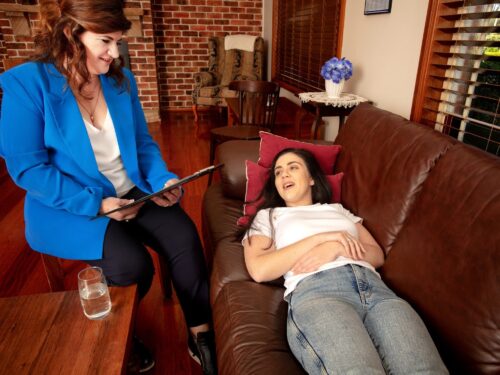
One practical step that is often overlooked is confirming the session format with your practitioner ahead of time. Some practitioners prefer the client to remain seated upright during the induction, while others work well with a client lying down. Knowing this in advance allows you to arrange the space accordingly before the session begins rather than adjusting mid-session.
Before the session, test your device's audio and video, and confirm the meeting link sent by your practitioner. Choose a location in your home where you will not be overheard or interrupted for the full duration of the session, which is typically 60 to 90 minutes. If your practitioner sends a pre-session questionnaire or preparation notes, complete these beforehand so the session can move into the therapeutic work without delay.
During the session, sit or lie in a supported and comfortable position. Your face should be visible on screen so the practitioner can monitor your responses and adjust pacing accordingly. Wear loose, comfortable clothing, and have a blanket nearby if being warm supports your ability to relax. Silence all notifications and place other devices out of reach.
After the session, allow a short period before returning to demanding tasks. Many clients feel deeply relaxed immediately following trance work, and a brief settling period is advisable before driving, exercising strenuously or re-entering a high-focus work environment.
Choosing a Qualified Online Hypnotherapist in Australia
Hypnotherapy is not a registered health profession under the Australian Health Practitioner Regulation Agency (AHPRA), which means there is no licensing requirement preventing someone from offering sessions without formal training. This makes it important to assess a practitioner's credentials before booking.
When evaluating an online hypnotherapist, look for membership with a recognised professional body. The Australian Hypnotherapists Association (AHA) and the Institute of Clinical Hypnotherapy and Psychotherapy (ICHP) both require members to hold recognised qualifications and to maintain continuing professional development. Membership with either body is a baseline indicator that a practitioner meets minimum training standards.
At minimum, a practitioner should hold a Diploma of Clinical Hypnotherapy. Additional qualifications in counselling, psychology or an allied health discipline are relevant where the presenting concern has a clinical dimension. Check that the practitioner has specific training or demonstrated experience in the area you are seeking help with, not just general hypnotherapy training.
Many reputable practitioners offer an initial consultation at no charge, which gives prospective clients an opportunity to ask questions, assess the practitioner's communication style, and determine whether online sessions are appropriate for their presenting concern before committing to a course of treatment. Useful questions to ask at this stage include how many sessions the practitioner typically recommends for your presenting concern, what the session structure looks like, and whether they have worked with clients online for a similar issue previously. For a detailed breakdown of what qualifications and credentials to look for, see the guide to hypnotherapist qualifications.
Online Hypnotherapy at Hilltop Hypnotherapy
Hilltop Hypnotherapy offers online hypnotherapy sessions to clients across Australia, conducted via secure video call. Sessions follow the same structured approach used in clinics and cover a range of presentations including anxiety, sleep difficulties, weight management, trauma, and dependencies. Whether you are based in a metropolitan area or a regional location with limited access to local practitioners, online sessions provide the same standard of care.
An initial consultation is available to discuss your presenting concern, determine whether online sessions are suitable, and answer any questions you have about the process before your first appointment. Sessions are available to clients throughout Australia regardless of location, including regional and rural areas where access to a local practitioner may be limited.
To book an initial consultation or enquire about online sessions, contact Hilltop Hypnotherapy directly through the website. If you are unsure whether hypnotherapy is the right approach for what you are dealing with, the consultation is the appropriate starting point.
References: Hasan, S. S., & Vasant, D. (2023). The Emerging New Reality of Hypnosis Teletherapy. International Journal of Clinical and Experimental Hypnosis, 71(2), 153-164. | Journal of Medical Internet Research, Vol. 14, No. 4 (systematic review of online vs face-to-face therapy). | Institute of Clinical Hypnotherapy and Psychotherapy (ICHP), hypnotherapy-australia.com.

Margaret Muscat is a Strategic Clinical Hypnotherapist and founder of Hilltop Hypnotherapy, trained through the prestigious Institute of Applied Psychology and accredited as an ISPA Practitioner, as well as an active member of both the Australian Hypnotherapist Association and the Hypnotherapy Council of Australia. She specialises in anxiety, depression, trauma, phobias, and dependency, combining evidence-based Clinical Hypnotherapy with Strategic Psychotherapy to deliver transformative, lasting results. Through her articles, Margaret shares practical, research-informed strategies drawn from years of clinical experience and deep personal insight.
Book Appointment NowRelated Posts
Hypnosis vs Meditation: Which Mind Practice Is Right for You?
Hypnosis and meditation both produce states of focused relaxation, and both have documented effects on stress, anxiety, and mental wellbeing. Yet they work through different mechanisms, serve different...
Hypnotherapy for Confidence: Building Self-Esteem from Within
Low confidence is not a fixed character trait. In most people, it is a learned pattern stored in the subconscious mind that shapes automatic responses to situations like social interaction, workplace...